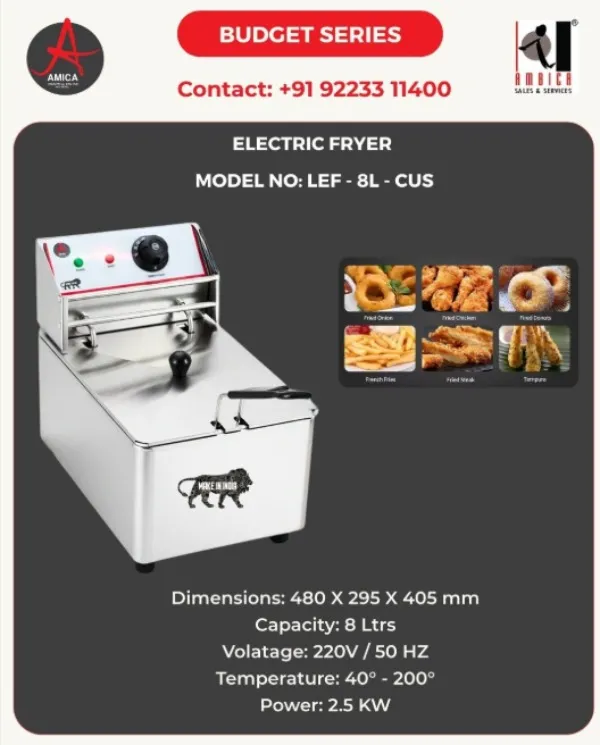
Fried foods can generate a large share of orders for quick-service restaurants, cafés, snack outlets, hotels and cloud kitchens. When frying demand becomes consistent, using equipment designed for professional production can improve workflow and help staff manage repeated batches more effectively.
Selecting the right deep fat fryer in Mumbai requires evaluating output, food type, available utilities and cleaning requirements before making a purchase.
Capacity Should Match Peak Orders
Businesses sometimes calculate fryer requirements according to daily sales. Peak-hour demand is more useful.
If a restaurant receives a large number of fried-food orders within a short period, insufficient fryer capacity can quickly create a backlog.
Estimate:
- Maximum portions required during the busiest hour
- Approximate cooking time per batch
- Number of different fried products
- Whether foods can share the same frying oil
- Available preparation and draining space
These details provide a clearer picture of required capacity.
One Fryer May Not Suit Every Menu
Restaurants preparing French fries, chicken, seafood and vegetarian snacks may need to consider flavour transfer and separate production requirements.
Using dedicated frying sections for specific product categories can also simplify workflow where menu volume justifies it.
The equipment decision should therefore consider both total output and the variety of foods being prepared.
Gas and Electric Options Require Different Planning
Depending on the equipment configuration, commercial fryers may operate using gas or electricity.
Businesses should check existing utilities before selection. Electrical models need suitable load capacity, while gas equipment needs appropriate connections and ventilation arrangements.
Temperature Management Matters
Repeated frying requires controlled heating. If oil temperature drops significantly when food is added, production can slow and product consistency may be affected.
The fryer should therefore be selected according to batch requirements rather than only physical dimensions.
Cleaning Is Part of Operating Efficiency
Oil and food particles need routine management. Equipment that provides practical access for cleaning can make daily maintenance easier for kitchen staff.
The surrounding floor and preparation area should also be designed to manage oil safely and maintain cleanliness.
Ambica Sales & Services supplies commercial cooking solutions for food businesses across Mumbai. Operators preparing to invest in frying equipment can benefit from discussing menu type, expected batch size and available kitchen space before finalising capacity.
A fryer becomes a critical production asset when fried items account for substantial order volume. Choosing equipment according to peak demand, menu segregation, utility availability and maintenance needs helps create a frying station capable of supporting reliable everyday service without unnecessarily consuming kitchen space.
Keywords