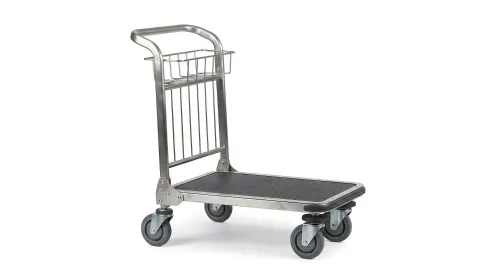
An oil-can pallet needs more than a platform that is wide enough: the deck, grid openings, caster layout, brakes and spill controls must suit the loaded pallet and the route through your kitchen or store. By checking those points, you can decide whether a removable grid trolley improves handling and cleaning, or whether a solid deck, pallet truck or bunded platform is safer.
Key takeaways
- Measure pallet contact points, loaded weight and usable grid dimensions.
- Keep the load centred and secure before moving the trolley.
- Choose a solid deck for leaks, debris and small-footprint loads.
- Ask suppliers for load rating, wheel details and grid-removal instructions.
Will the pallet sit securely on the removable grid?
Yes, but only if the pallet and load fit the grid as a stable structure, not merely within the trolley’s outer frame. Measure the pallet’s outside length and width, underside contact points, loaded height and total weight, including pallet tare. Compare them with the clear usable platform, maximum permitted overhang and edge restraint.
Common footprints are 1,200 × 800 mm and 1,200 × 1,000 mm, but oil suppliers also use smaller proprietary pallets or place cans directly on a deck. Check that no pallet foot or can can pass through an oversized grid opening, and that the base openings do not leave contact points unsupported.
CheckConfirmReject the trolley ifFootprintClear platform exceeds pallet size within the permitted overhangThe pallet projects beyond the stated edge limitBase supportEvery foot rests on a rail or adequately supported grid areaA foot aligns with a large opening or can slide throughGrid retentionLocating pins, captive fasteners or a formed seat stop lifting and rattlingThe grid shifts during braking or threshold crossingsLoad controlNumber and size of cans, product weight, tare, centre of gravity and route hazards are documentedThe rating covers only an evenly distributed static load
Treat the stated capacity as a starting point; a heavy pallet pushed over a ramp needs more proof. The platform trolley removable grid benefits matter only after this fit check, because convenience cannot correct an unstable oil can pallet trolley.
How should you load, move and unload the pallet?
An oil can pallet trolley is safe only when it controls the load from pickup through storage. Inspect the pallet and every can before loading; isolate a cracked pallet, bulging can or damaged seal instead of placing it on an open grid.
1. Place the platform trolley for commercial kitchens square to the pallet and apply the wheel brakes. Centre the pallet between the frame rails, keep the heaviest cans low, and keep the load within the retaining edge. Do not stack above that edge without rated straps or another positive restraint.
2. Before moving, check that no pallet foot is caught in the grid, then release the brakes. Push rather than pull when you have better visibility and control, keep both hands on the handle or frame, slow before turns and cross thresholds squarely.
3. Keep cans out of doorways, away from cooking equipment and out of pedestrian routes until the path is clear. A high centre of gravity, loose cans or a ramp can make a nominally suitable trolley unsafe.
4. At the destination, brake on level ground before unloading. Use a pallet truck or other suitable aid if the oil can pallet trolley cannot align with the storage position. Check doorway and lift dimensions, aisle width, turning clearance, floor slopes and thresholds before purchase.
What do the removable grid and cleaning arrangement actually improve?
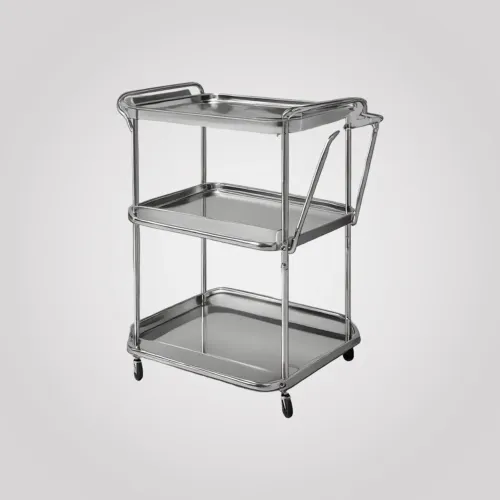
A removable grid improves access and inspection, not spill containment. Removing it exposes the pallet underside, trolley frame, caster mounts and floor for washing, while gaps, damaged cans and accumulated debris become easier to see. These are key platform trolley removable grid benefits for a platform trolley for commercial kitchens.
Use the cleaning arrangement only if the grid is light enough for one worker to handle safely, tool-free or simple to release, and positively secured during movement.
1. Remove the grid according to the supplier’s procedure. Clean the grid and joints separately so oil and food residue do not remain at contact points.
2. Inspect welds, corners, tube ends and fasteners for rough surfaces, crevices or oil traps. Dry every part before reassembly.
3. Wipe spilled cooking oil promptly, keeping it away from drains and food-contact areas. Oil passes through grid openings onto the floor, wheels and lower frame, so the grid is not a drip tray.
4. For leaking or partly open containers, specify a removable solid drip pan or bunded tray with stated capacity and a clear drain and cleaning method.
Request the material grade, weld finish, surface treatment and compliance documents when wet cleaning, corrosion resistance or food-contact suitability matters. A trolley that transports oil containers is not automatically suitable for direct food contact; “304 stainless steel” alone does not prove hygienic design.
Is a grid deck better than a solid platform or pallet truck?
Choose the surface and equipment according to the main risk: access and cleaning favour a grid, while liquid containment favours a solid deck.
OptionMain advantageBest fitRemovable gridExposes the underside for washing and leak inspectionOne trolley alternating between dry pallets and wash-down dutySolid platform with drip panWipes clean and contains recurring leaksDedicated oil-storage routesPallet truckEfficient fork entry and direct transfersPallets with adequate fork openings, turning space and threshold-free floorsRailed trolleyHelps contain tall or loose cansLoads that shift during turns
The platform trolley removable grid benefits disappear if the grid is heavy, difficult to release or unsafe to reassemble. A grid deck is not a spill tray: oil reaches the floor, casters and lower frame. Use a removable solid drip pan or bunded tray when containers leak.
A low retaining edge or straps can secure a stable, low pallet. Skirting shields the frame but hides leaks and adds cleaning joints. Four swivel castors turn tightly; two swivel and two fixed track better over longer runs. A directional lock or fifth wheel assists heavy loads.
For a platform trolley for commercial kitchens, compare wheel diameter, tread, bearing protection, floor compatibility and brake type. Use powered handling when weight, gradients or route length make manual pushing excessive.
Which specifications reveal whether the trolley will control the load?
Capacity is only the starting figure: compare the operating controls of an oil can pallet trolley, not its maximum rating. Ask whether the rating covers a static, evenly distributed load or movement over thresholds, and include the pallet tare in the total.
For four castors, use roughly one-third of the total loaded weight per castor; cornering and uneven floors can unload one wheel. Confirm that rating with the castor supplier for the intended speed, floor and wheel material.
SpecificationWhat to verifyFailure riskFrame and gridRigid frame, sound welds, suitable platform height, opening size and positive grid retentionFlexing, pallet movement or grid lift during brakingLoad controlRetaining edge, strap points and restraint for individual cansCans slide or toppleBrakingBrake locks both wheel and swivel, or clearly states which function it locksTrolley rolls or pivots while loadingWheelsLarge diameter, detergent-resistant, non-marking polyurethane or comparable treadShock at thresholds and floor damage
Inspect rough welds, unsealed tube ends, crevices, mixed-metal fasteners and exposed castor fittings. Request stainless-steel grade, passivation or equivalent treatment, plus the grid’s resistance to lifting. Stop if capacity is exceeded, the pallet is unstable, powered handling is needed, or cans lack restraint.
What should you ask a removable grid trolley supplier in Mumbai?
Write a purchase specification before contacting a removable grid trolley supplier in Mumbai. For a removable grid platform trolley for oil can pallets in Mumbai, state:
- Pallet footprint, loaded mass including tare, centre of gravity, can arrangement, maximum overhang and containment requirement
- Route length, aisle and doorway measurements, lift dimensions, slopes, thresholds and cleaning regime
- Clear platform length and width, grid opening size, platform height, frame and weld details, stainless grade, grid retention method, castor diameter, wheel material, swivel-and-fixed layout, brake operation, caster rating and load-test basis
- Spare grids, replacement castors and local service response
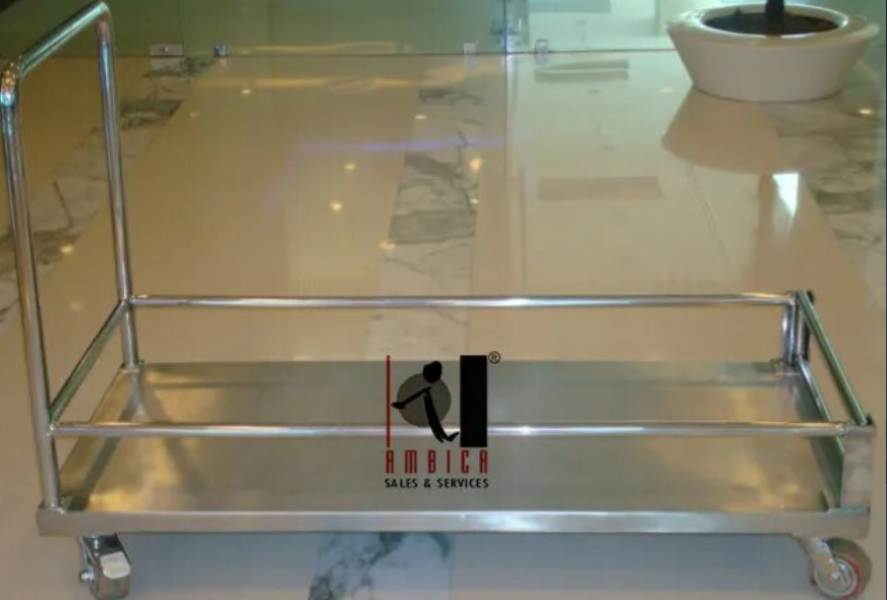
Ambica Sales & Services belongs in the comparison only when its equipment specification and documentation match your route. Do not accept a catalogue photograph or product name as proof of suitability.
Inspect a sample or drawings for trapped-oil points, removable-grid access, retaining edges and pallet contact; request compliance documents for direct food-contact use rather than confusing that with transport hygiene.
OptionChoose it whenReject it whenGrid deckStable pallet, retained grid and controlled routeLeaks need containmentSolid bunded deckOil leakage is recurringUnderside access mattersPallet truck or powered systemFork entry, distance or gradient demands itAisles, lifts or thresholds cannot accommodate it
Related products
 Scullery
Platform Trolley with Removable Grid 1
Platform Trolley with Removable Grid 1
View product → Scullery
Platform Trolley with Removable Grid 3
Platform Trolley with Removable Grid 3
Frequently asked questions
- Will an oil can pallet sit securely on a removable grid platform trolley?
- It will sit securely when the pallet’s underside contact points align with the grid, the loaded weight stays within the trolley rating and overhang remains controlled. Measure the pallet, including its outside length, width and tare weight.
- How should you load, move and unload an oil can pallet trolley?
- Centre the pallet over the strongest grid area, keep the load below the rated capacity and check that cans cannot shift. Push rather than pull where practical, move slowly over thresholds and apply the wheel brakes before unloading.
- What do the removable grid and cleaning arrangement improve?
- A removable grid gives access to spills, residue and debris beneath the pallet. Confirm that the grid lifts out without tools and that the frame, welds and drainable surfaces can be washed and dried thoroughly.
- Is a grid deck better than a solid platform or pallet truck?
- A grid deck suits loads needing airflow, drainage or access underneath. Choose a solid platform for leaking containers, loose small items or easy wipe-down cleaning; choose a pallet truck when you need to lift and move standard pallets over longer warehouse routes.
- Which specifications show whether the trolley will control the load?
- Check usable platform length and width, safe working load, maximum overhang, grid spacing, edge restraints, castor diameter, wheel material, brake arrangement and handle height. Request the rating for the trolley’s actual floor conditions.
Keywords