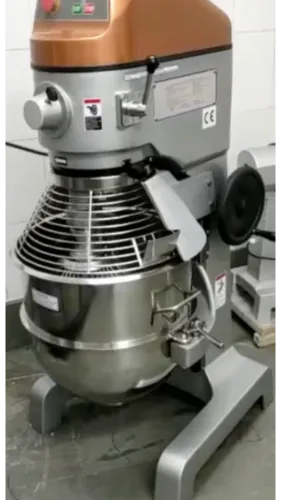
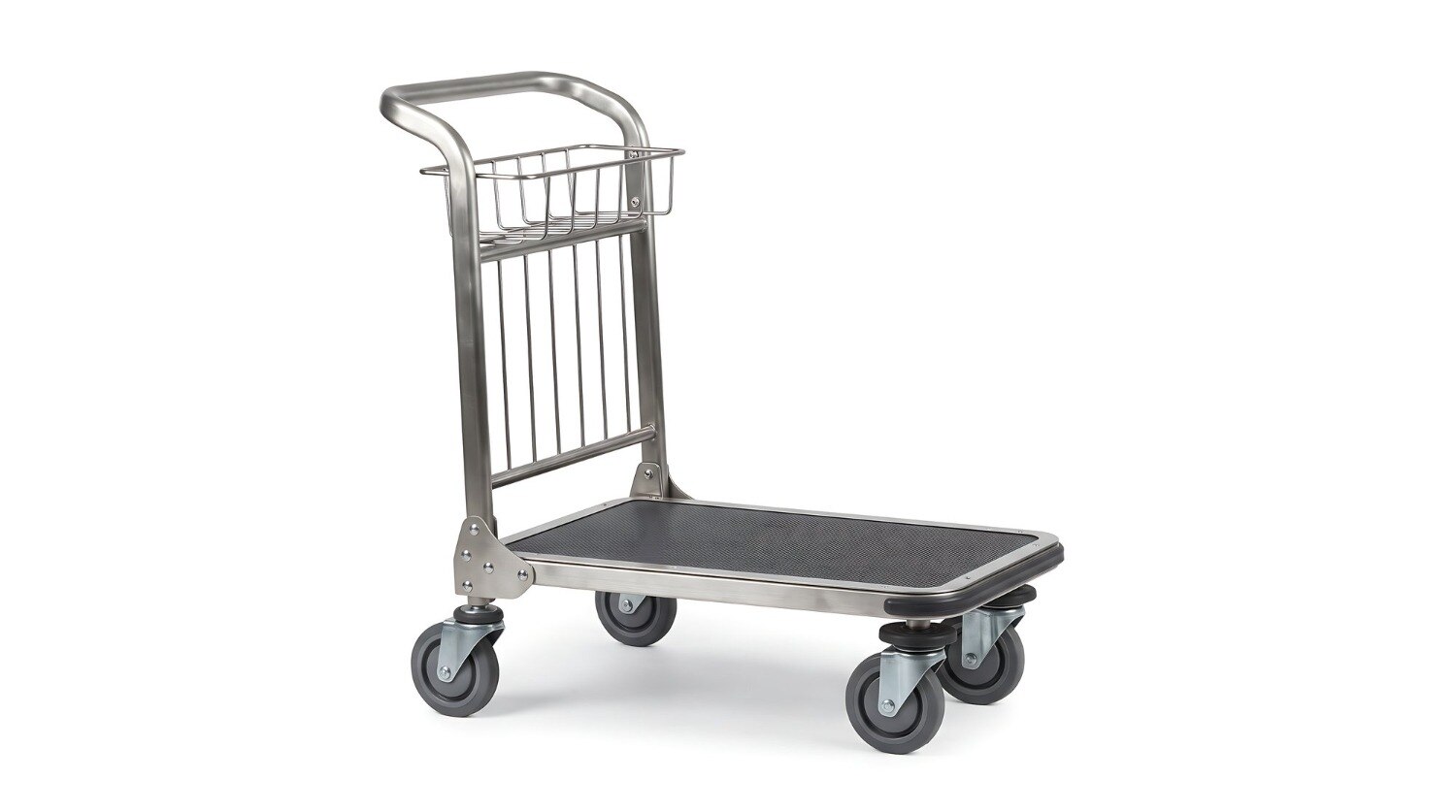
A scullery trolley only improves service when its dirty and clean routes are separated, its steriliser is positioned securely, and operators can drain and clean every component. By the end, you will be able to plan the layout, check site dimensions, compare trolley formats and specify a spoon-sanitising setup that is safe to move and practical to maintain.
Key takeaways
- Keep used utensils and sterilised spoons on separate physical routes.
- Confirm trolley dimensions, wheel clearance and loaded capacity before ordering.
- Specify removable grids for drainage, cleaning and inspection.
- Request temperature, cycle-time, drainage and wet-area safety details in writing.
Where the Trolley and Spoon Steriliser Fit in the Scullery Flow
Keep the dirty return route physically separate from the clean-spoon route. Even if the steriliser reaches its target temperature, using the same open platform for used utensils and cleaned spoons can transfer contamination back to serviceware.
Arrange the scullery flow in this order:
- Receive dirty utensils at the wash-up entrance, away from the service counter.
- Scrape food waste and pre-rinse utensils into the designated waste and drainage points.
- Wash and rinse utensils before loading spoons into perforated baskets or racks.
- Move the loaded rack to the spoon steriliser without crossing the clean holding area.
- Sanitise, drain and allow the spoons to dry inside a protected clean zone.
- Transfer the drained rack to covered clean storage or directly to service.
A platform trolley with spoon steriliser in Mumbai works best when the steriliser is mounted low, restrained against sliding and positioned near the wash-to-clean boundary. A full tank raises the centre of gravity, so check the rated load with water and utensils inside; use a wide wheelbase where thresholds or uneven floors exist.
Mounting options suit different layouts:
| Option | Arrangement | Best use |
|---|---|---|
| Mounted unit | Tank fixed to the trolley | Short, controlled wash-to-service route |
| Platform unit | Steriliser placed on the deck and restrained | Removable equipment or changing workloads |
| Separate unit | Trolley works beside a fixed steriliser stand | Permanent wash area with limited movement |
A spoon steriliser kitchen trolley should be treated as a sanitising unit unless its cycle has been validated for sterilisation. Keep its drain away from the platform, casters and operators’ feet.
What the Removable Grid Adds Compared with Other Scullery Trolleys
A removable-grid platform best supports movement and drainage when it carries dirty utensils in perforated baskets while the sterilised spoons remain in a separate, restrained container. It does not create clean-dirty separation by itself; sharing one open surface for both routes can contaminate spoons after sterilisation.
| Option | Movement and drainage | Separation and main drawback |
|---|---|---|
| Removable-grid platform | Grid lifts for basket handling, spills and wash-down; open frame improves access | Best option when the grid has wide, sealed joints and the steriliser has a separate mount; narrow crevices trap residue |
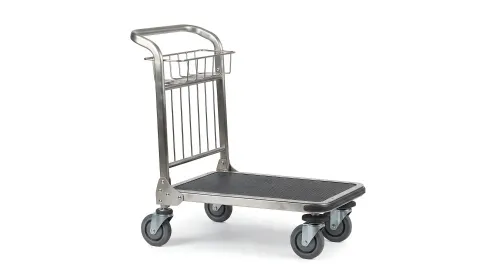
| Flat platform trolley | Stable for boxed or closed containers, but water and scraps remain on the solid deck | Simple to wipe, yet it offers weak drainage and no natural separation |
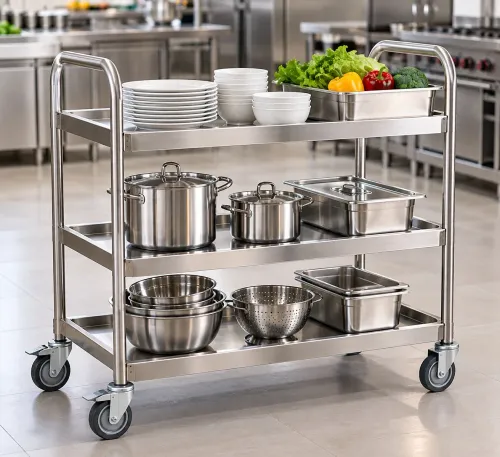
| Dish-collection trolley | Shelves or tubs organise used plates and utensils during return | Suits dirty collection, not sterilised-spoon transport; residue can spread between levels |
| Three-tier dirty-dish trolley | Moves high volumes with dedicated shelves | Its open, stacked format keeps dirty ware close to clean items and is difficult to zone safely |
| Fixed steriliser stand | Gives the tank a stable, low position and reliable drain route | Does not move spoons between the scullery and service counter |
For a platform trolley removable grid in Mumbai, confirm that operators can lift the grid without tools and reach every frame surface. Fit the steriliser low on the chassis, secure it against braking and turning, and check the rated load with the tank full. A low centre of gravity and wide wheelbase matter at thresholds.
The drain needs a low-point valve and hose-safe outlet that misses the platform, casters and feet. Compare caster replacement and drain-part availability before choosing a scullery trolley in Mumbai; a cheaper frame becomes costly when cleaning or repairs stop the flow.
How to Check Fit, Load Capacity and Movement Before Ordering
Measure the complete route, not just the trolley deck. A platform trolley with spoon steriliser in Mumbai must pass through doors, turns, ramps and scullery aisles with both hands on the handle and without trapping an operator against a wall.
1. Record the narrowest door opening, aisle width, turning space and floor-threshold height. Compare these measurements with the trolley’s overall width, length, handle projection and wheel diameter. Test the route with the trolley loaded; a clear empty path can become unsafe at a sharp turn.
2. Calculate the filled load: steriliser tank water in litres is approximately the same number of kilograms, then add the steriliser, removable grid, racks, spoons and containers. Check this total against the manufacturer’s rated load with the tank full, not against the platform rating alone.
3. Check stability at the highest operating load. A full tank raises the centre of gravity, so prefer a low-mounted steriliser and wide wheelbase for thresholds or uneven floors. Require a restraint strap, brackets or fixed mounting points; braking can slide an unsecured tank even below the rated capacity.
4. Lift the grid without tools and inspect the frame beneath. A platform trolley removable grid in Mumbai is useful only when operators can clean under it without reaching into narrow crevices.
5. Push, stop and turn the loaded trolley with the intended operator. Reject caster binding, handle flex, excessive force, tank movement or contact between the drain outlet and wheels, platform or feet.
Sanitising Performance, Drainage and Wet-Area Safety Checks
A spoon steriliser kitchen trolley is suitable for foodservice only when its hot-water cycle is specified as sanitising, not medical sterilisation. Ask for the target temperature, holding time and recovery time with a full load, then check the water using a calibrated thermometer. A displayed temperature alone does not prove that every spoon reached it.
1. Check cleaning access. The tank should have a removable basket or grid, rounded internal corners, a visible heating element or protected heater cover, and no narrow crevices that trap food soil. Confirm that the lid, basket and drain components can be removed without special tools.
2. Check drainage. Require a low-point drain, accessible valve and a heat-resistant hose connection. Discharge must flow into the floor drain or a designated container, not across the platform, caster assemblies or the operator’s feet. Standing hot water leaves a contamination and scalding hazard.
3. Check corrosion controls. Confirm the stainless-steel grade, continuous weld finish and passivated welds. In a scullery trolley in Mumbai, detergent, chloride-rich water and saline residue can cause tea-staining or pitting, even on stainless steel. Avoid abrasive pads and specify rinsing after chemical cleaning.
4. Check wet-area safety. Require a low-water cut-off, over-temperature protection, insulated handles, a secure lid, lockable casters and a stable brake. Select large, corrosion-resistant wheels with clearance from drain covers, thresholds and wall edges.
Keep the clean-spoon route separate from used returns; a hot cycle cannot correct cross-contamination after sterilising.
How to Write a Quotation-Ready Specification for Mumbai Operations
A quotation brief should describe the operating result, not ask for a “platform trolley with spoon steriliser in Mumbai” by name. State the route: dirty-spoon return, washing, hot-water sanitising, draining and clean-spoon transfer, with no shared open platform between dirty and clean utensils.
- Give the trolley’s overall length, width and height, doorway and threshold dimensions, turning space, and the maximum filled tank load.
- Specify stainless-steel grade, sheet thickness, welded or folded construction, rounded cleanable corners, removable grid details and the rated load with the steriliser tank full.
- Require a low-mounted tank and wide wheelbase if the scullery floor is uneven. State caster diameter, brakes, swivel arrangement, bearings, bumpers and replacement-caster availability.
- Ask for measured water temperature and holding time. For hot-water sanitising, require at least 77°C for 30 seconds, or a documented equivalent time-temperature cycle; call the unit a steriliser only if the supplier provides a validated sterilisation cycle.
- Describe the drain: low-point outlet, accessible valve, hose connection, discharge direction and protection from water reaching the platform, casters or operator’s feet.
- List the electrical supply, controls, insulation, over-temperature protection, cleaning access and parts warranty. Ask how the tank, valve, heating element and casters are serviced.
For a scullery trolley in Mumbai, request delivery, installation, commissioning and local service response as separate quotation lines. Ambica Sales & Services can be asked to quote its removable-grid trolley against these filled-load, drainage and service criteria rather than against an undefined catalogue label.
Related products
 | Scullery Platform Trolley with Removable Grid 1 Platform Trolley with Removable Grid 1 View product → |
 | Scullery Platform Trolley with Removable Grid 3 Platform Trolley with Removable Grid 3 View product → |
Frequently asked questions
Where should a platform trolley with a spoon steriliser fit in the scullery flow?
Place it after washing and rinsing, while keeping the dirty return route physically separate from the clean-spoon route. Do not use the same open platform for used utensils and sterilised spoons.
What does a removable grid add to a scullery trolley?
A removable grid improves drainage and lets staff lift out trapped food debris for washing and inspection. It also makes cleaning easier than a fixed solid platform.
What should you check before ordering a scullery trolley in Mumbai?
Check overall dimensions, doorway and lift access, turning space, wheel type, brake position and loaded capacity. Test the route with the trolley fully loaded, not empty.
Which sanitising and wet-area details belong in the specification?
Ask for the steriliser’s target temperature, cycle time, temperature-control method, drainage arrangement, electrical protection and safe operating instructions. Confirm that water cannot pool around wheels or electrical parts.
How do you prepare a quotation-ready specification for a Mumbai operation?
State trolley dimensions, stainless-steel grade, grid size and removability, caster diameter and brakes, load capacity, steriliser capacity, cycle requirements, drainage, power supply and delivery-site constraints.
Keywords