A large mixer in Mumbai can cost about ₹70,000 to ₹6 lakh before differences in GST, delivery, installation and service are resolved. The useful comparison is not bowl size alone: you need to match product load, batch frequency, electrical supply, floor access and mixer type to your menu.
Key takeaways
- Budget ₹70,000–₹1.5 lakh for a new 20–30 L planetary mixer.
- Choose a spiral mixer for dough-heavy menus and a planetary mixer for varied products.
- Size capacity from batch weight, daily output and peak-hour demand—not bowl volume alone.
- Verify electrical load, floor space, service access and installation scope before ordering.
What should you budget for a large industrial mixer in Mumbai?
Budget ₹70,000–₹1.5 lakh for a basic 20–30 L planetary mixer, ₹1.3–₹3.5 lakh for a 40–60 L planetary mixer, and ₹2.5–₹6 lakh for a 50–100 kg spiral dough mixer. These are budgeting bands for new equipment, not live quotations. Searches for industrial mixer large price in Mumbai often mix machine-only and installed prices.
| Mixer type | Indicative purchase band | Important comparison |
|---|---|---|
| 20–30 L planetary | ₹70,000–₹1.5 lakh | Basic restaurant production |
| 40–60 L planetary | ₹1.3–₹3.5 lakh | Larger batch and heavier duty |
| 50–100 kg spiral | ₹2.5–₹6 lakh | Repeated dough production |
A quotation for an industrial mixer in Mumbai can rise with stainless-steel bowl grade, imported controls, attachments, freight, warranty coverage and local service response. Continuous and high-shear machines need separate quotations because they are not comparable with batch mixers. An ex-works or machine-only figure is not the final installed cost.
Request these as separate quotation lines:
- Machine price
- GST
- Delivery within Mumbai
- Unloading
- Installation
- Electrical work
- Commissioning
- Warranty
- Preventive maintenance
What does “large” mean beyond the bowl capacity?
A 40 L bowl is not a 40 kg dough machine. Define a restaurant industrial mixer with three figures: bowl or vessel volume in litres, maximum permitted product load in kilograms, and usable batch size after leaving headroom for expansion and tool movement.
| Product | What changes the safe load | What to request |
|---|---|---|
| Dough | Flour absorption, stiffness, recipe temperature, dough-hook selection and motor rating | Maximum dough load, cycle time and cooling interval |
| Batter | Density, aeration and flat-beater or whisk selection | Maximum batter load and permitted speed |
| Cream | Temperature, aeration and whisk clearance | Maximum cream load and continuous running limit |
| Sauces | Viscosity, temperature and scraper or paddle use | Maximum sauce load and duty cycle |
| Dense mixtures | High resistance can strain the gearbox and motor | Maximum load for the named recipe |
A 40 L vessel might handle very different weights across these products. Do not compare machines by bowl litres or peak horsepower alone; ask for the manufacturer’s written load table by product type, recommended cycle time and minimum cooling interval.
Size from your recipe’s finished batch weight, then match it to that written table. The usable batch—not the advertised headline capacity—is the figure that determines whether the machine can complete service without spillage, stalled tools or overheating.
Which mixer type fits a restaurant’s menu?
For a restaurant industrial mixer, choose by the product you make repeatedly, not by bowl size alone. An industrial mixer in Mumbai may be planetary, spiral, horizontal, ribbon or a specialised food-processing machine; these are not interchangeable.
| Type | Best fit | Main advantage |
|---|---|---|
| Planetary | Batter, cream, pastry and dough | Accepts a whisk, flat beater and dough hook for varied menus |
| Spiral dough | Repeated bread, pizza and other dough batches | Better aligned with high dough throughput |
| Horizontal | Dense, repeated dough or filling production | A trough and horizontal shaft improve batch handling |
| Ribbon | Dry or semi-dry powders, spice blends, premixes and some thick mixtures | Ribbon agitation handles blending without relying on planetary tools |
| Heavy-duty food-processing | Large-volume sauces, fillings, emulsions, continuous or high-shear work | Built for specialised processing beyond ordinary batch mixing |
A large planetary mixer can cost more per kilogram of dough capacity, but its interchangeable tools give a restaurant broader menu flexibility. Choose a spiral mixer when dough output dominates; choose a horizontal model when dense batches must move through a trough efficiently.
A quotation is incomplete unless it names the mixer type and product application. Ask whether the stated load refers to pizza dough, bread dough, batter, cream, filling or powder, and request the cycle time and permitted batch weight for that product.
How do you calculate the capacity your restaurant actually needs?
Start with peak menu demand, not the largest machine available. List each preparation, its batch weight, batches required per hour during peak service and preparation hours available before service.
Multiply batch weight by required batches to find hourly demand, then compare it with the supplier’s permitted load and complete cycle time: loading, mixing, unloading and cleaning.
- Calculate pizza dough, cake batter, whipped cream, sauces and fillings separately; one bowl rating does not apply equally to each product.
- Leave headroom so the tool can move without spillage and dough can develop without overloading the transmission.
- Ask for the manufacturer’s load table and duty rating for each recipe, not only bowl litres or peak horsepower.
| Preparation | Capacity check | Workflow question |
|---|---|---|
| Pizza dough | Finished batch weight × batches per hour; include dough development time | Can the mixer repeat cycles without a long cooling interval? |
| Cake batter or cream | Use the permitted batter or cream load, with room for aeration | Are interchangeable bowls and tools available? |
| Sauces or fillings | Check the product-specific load and full cleaning cycle | Can operators remove and clean the bowl quickly? |
A machine rated for one heavy batch may deliver less real output than a smaller machine built for repeated cycles. For an industrial mixer in Mumbai, also measure bowl-lift height, bowl-removal clearance, interchangeable-bowl needs and the number of operators required.
Which motor, tool and electrical specifications change performance?
The technical quotation for a restaurant industrial mixer must state motor horsepower or kilowatts, operating-speed range, variable-speed control, gearbox or transmission duty, overload protection and written duty cycle. Peak horsepower alone hides a machine that overheats after one heavy batch.
| Tool | Best use | Why it matters |
|---|---|---|
| Whisk | Cream and aerated mixtures | Builds volume without using a beater |
| Flat beater or paddle | Batters and soft mixtures | Mixes evenly without excessive aeration |
| Dough hook | Bread and pizza dough | Handles elastic, dense dough |
| Scraper | Reducing manual bowl cleaning | Removes material from the bowl wall during mixing |
| Interchangeable bowls | Multiple preparations | Separates dough, cream and batter workflows |
The quotation must state 230 V single-phase or three-phase supply, frequency, rated current, breaker requirement, cable size and whether a starter, inverter and overload relay are included. Smaller machines may use single-phase power; larger restaurant machines commonly need three-phase power.
Require safety guards, interlocks and an emergency stop. A machine that runs with the guard open, or exposes moving tools during coast-down, is not equivalent to a properly guarded model even when its motor and bowl sizes match. Ask the supplier to write the permitted load and cycle time for each product.
What must you verify before installation and purchase?
Before accepting an industrial mixer large price in Mumbai, measure the route and service space, not only the catalogue footprint. Confirm loading and cleaning clearance, door width, lift dimensions, turning radius, floor loading, bowl-removal space, and the height needed to raise or tilt the bowl.
Check drainage and ventilation around the motor housing so heat can escape.
- Ask for the grade and finish of every food-contact surface: bowl, agitators, guard and fasteners. Inspect seams, welds and crevices for cleanability under FSSAI hygiene practices; trapped residue creates contamination and cleaning delays.
- Compare ownership costs, not just the quotation: spare-tool availability, replacement belts, bearings, timers and control boards, service response time, and warranty exclusions.
| Supplier evidence | What to verify | Risk if missing |
|---|---|---|
| Manufacturing location | Factory address and whether the seller fabricates, assembles or distributes | Unclear accountability |
| Technical records | Serial-number records, electrical drawings and spare-parts list | Delayed repairs and incorrect components |
| Support terms | Service escalation contact, response commitment and warranty exclusions | Downtime charged to you |
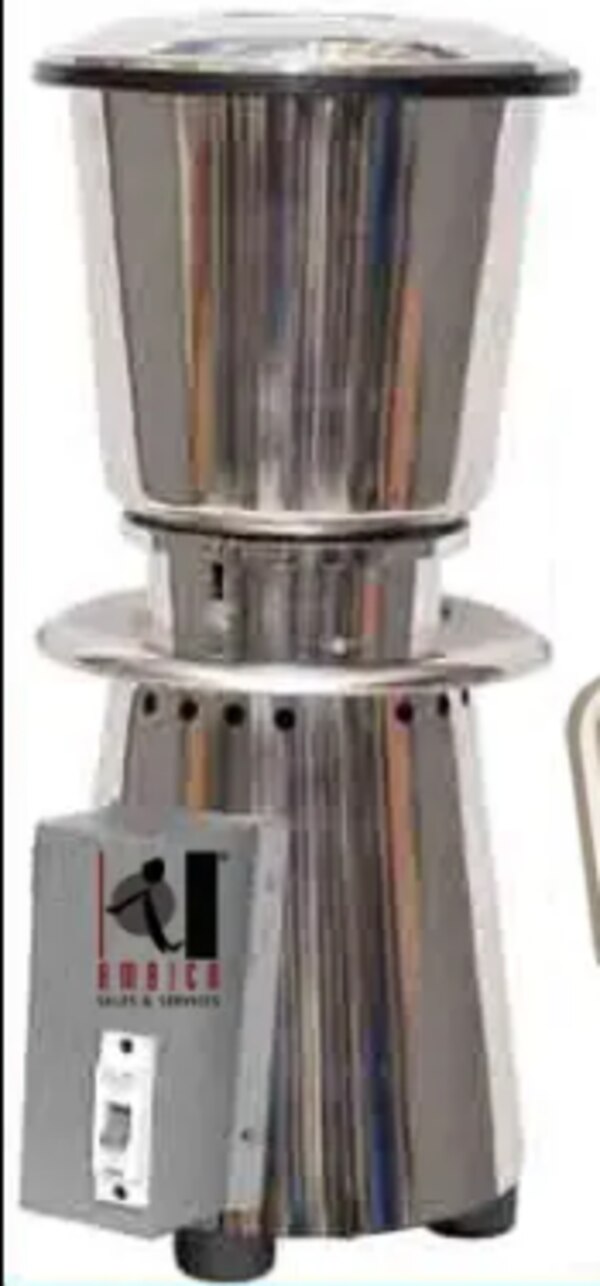
For a seller described as a commercial mixer manufacturer in Mumbai, request these documents before treating the claim as proof of local manufacture. Ambica Sales & Services is one local equipment source to evaluate against the same documented installation and after-sales criteria.
Related product
 | Machinery Industrial Mixer Large View product → |
Frequently asked questions
What should you budget for a large industrial mixer in Mumbai?
Budget ₹70,000–₹1.5 lakh for a basic 20–30 L planetary mixer, ₹1.3–₹3.5 lakh for a 40–60 L planetary mixer, and ₹2.5–₹6 lakh for a 50–100 kg spiral dough mixer. These are budgeting bands for new equipment, not live quotations, and may exclude delivery, installation, taxes or electrical work.
What does “large” mean beyond the bowl capacity?
Assess batch weight, motor power, floor footprint, machine height, tool clearance, electrical load, duty cycle and access for cleaning and servicing. A larger bowl does not automatically mean higher dough capacity.
Which mixer type fits a restaurant’s menu?
Choose a planetary mixer for batter, cream, mashed foods and smaller dough batches using interchangeable tools. Choose a spiral mixer for repeated bread, pizza or roti dough production, where dough capacity and kneading consistency matter more than tool variety.
How do you calculate the capacity your restaurant actually needs?
Measure the heaviest batch, batches required during the busiest hour, dough hydration and the manufacturer’s rated capacity for that product. Leave production headroom instead of filling the bowl to its geometric maximum.
Which motor, tool and electrical specifications change performance?
Compare motor power, gearbox construction, speed settings, timer controls, bowl and tool materials, overload protection, phase configuration, voltage and connected load. Match the whisk, beater or dough hook to the product and batch size.
Keywords