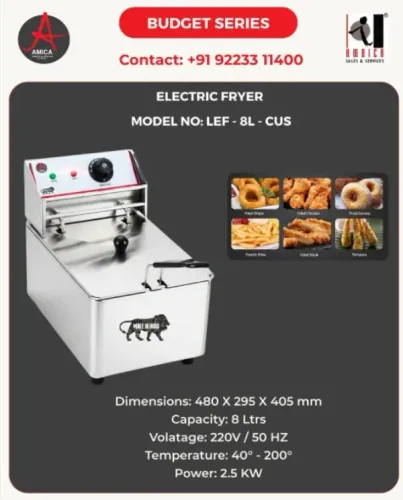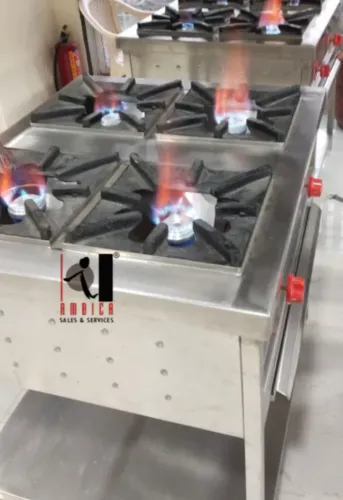
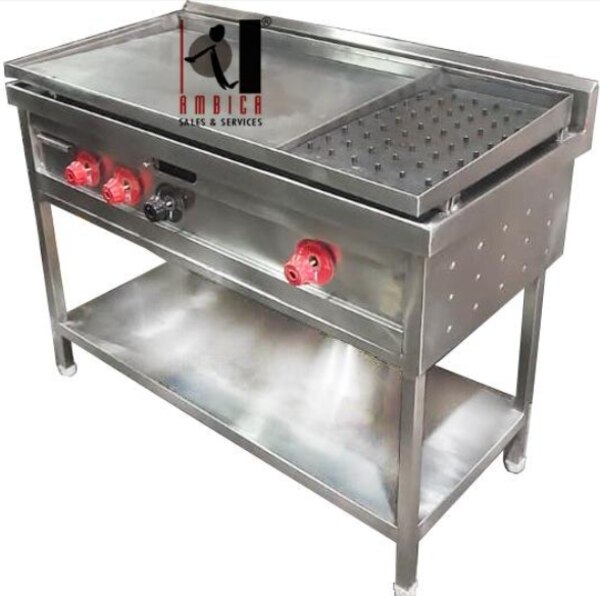
Choosing between these appliances depends on how chapatis are puffed, how many finished pieces you need during peak service, and what your site can safely support. You will be able to compare heat, output, labour, installation, running cost and product quality before requesting a quotation.
Key takeaways
- Compare finished chapatis per hour, not plate diameter.
- Check electrical load, ventilation and fuel storage before choosing.
- Request wattage, recovery time, output and installation costs in writing.
- Choose wood fire only when flavour, fuel handling and maintenance fit your operation.
How the Two Appliances Actually Cook Chapati
An electric puffer cooks chapati against a heated metal plate, then finishes the puff through a separate mechanism; a wood-fire oven uses radiant heat from the fire and dome, hot air, and conduction from the hearth.
A quotation for a chappati plate with puffer electric or wood fire oven must name the puffing method: hot-air jet, heated upper chamber, mechanical press, or transfer to a second zone. “Puffer” is not a standard design.
| Electric plate | Direct contact, then controlled puffing | Ask for plate material and thickness, cooking-zone dimensions, thermostat range, puffing temperature, dough-ball weight and finished pieces per hour |
|---|---|---|
| Wood-fire oven | Hearth, dome, flame and ember heat | Manage fuel, ember position, bake zone, turning, ash and smoke exposure |
Trial an electric plate at a 220–280°C metal-surface temperature, with roughly 15–30 minutes for preheating. Verify the manual and measure the plate with an infrared thermometer; measure metal, not air above it, and do not call that reading a chamber temperature.
The operator still portions and rolls dough, places each piece consistently, starts or transfers puffing, removes chapati and watches recovery after loading.
A wood-fire oven often needs 45–90 minutes to preheat, depending on refractory mass and fuel. Confirm readiness with separate hearth and dome readings. Staff build the fire, establish and move the ember bed, turn chapati and remove ash. Wood brings blistering, char and smoke flavour; electric control brings more uniform heat.
Hydration, thickness, placement and turning still decide the result.
Compare Finished Chapatis per Hour, Not Plate Size
Measure throughput with the same dough, not the same plate area: for example, 80 g dough balls rolled to 16 cm diameter. Count finished chapatis after loading, puffing, unloading and brief recovery, then record simultaneous cooking capacity, recovery after a full load and output across three consecutive peak-hour cycles.
| Option | Capacity and control | Quality and labour |
|---|---|---|
| Electric puffer for commercial kitchens | Small plates lose speed when cold dough drops surface temperature; a wrongly placed thermostat, blocked air jet, blower or sensor causes further delay. Include preheat, idle-fire time and operator loading. | Check softness, drying and blistering across the surface. Repeat the trial with the operator’s normal turning skill. |
| Wood-fire oven | Several heat zones increase simultaneous cooking, but output changes as wood burns down, the door opens and embers move. Include fire-building, idle-fire time, turning and ash work. | Judge char, smoke exposure, blistering and dryness by zone; fire management determines consistency. |
| Electric chappati machine | Compare tested finished pieces per hour and labour consistency when repetitive volume dominates. | Choose it for repeatability, not a nominal motor rating. |
| Electrical griddle plate | Compare it when flexible flat cooking matters more than automatic puffing. | It demands more manual puffing and turning. |
Map hot and cold spots with an infrared thermometer and a repeatable placement pattern. Shiny stainless steel can give false readings, so follow the manufacturer’s emissivity guidance or use a small approved test mark. A nominal motor rating or plate area proves nothing without this timed, full-load test.
Include preheat, recovery, staff time and quality results in the decision.
Test Whether Your Mumbai Site Can Support the Heat Source
A site fails before the appliance arrives if its sanctioned load, exhaust route or fire controls are inadequate. For an electric puffer for commercial kitchens, photograph the nameplate and record voltage, phase, frequency, connected load in kilowatts and full-load current.
Do not assume Mumbai provides 230 V single-phase or approximately 400 V three-phase; have an electrician confirm the sanctioned load.
| Option | Site checks | Failure risk |
|---|---|---|
| Electric puffer | Separate circuit, breaker, cable, isolator, earthing and safety cut-outs; hood for steam, flour dust, heat and oil aerosol | Voltage drop, nuisance trips or poor capture |
| Wood fire oven | Solid-fuel hood and duct, chimney dimensions, spark or ember control, clearances, fire-safe floor, make-up air, access and smoke control | Smoke, carbon monoxide, deposits, fire exposure or rejected exhaust |
| Both | Delivery route, floor loading, working clearance, dough-preparation and service distances | The unit fits but cannot be installed or operated safely |
Make the quotation state the breaker rating, cable size, isolator position and earthing arrangement. Electric cooking removes combustion at the plate, not the need for extraction.
For a wood fire oven for catering in Mumbai, specify dry fuel storage, permitted wood species, maximum log size, moisture requirement, ash containers and ember disposal. Confirm permissions, fire-safety requirements and exhaust termination with the owner, installer and applicable Mumbai authority.
Check neighbouring buildings, duct routing and inspection access before purchase. A compact restaurant can reject wood because smoke dispersion, make-up air or storage is impossible, even when the oven itself fits. Generic dimensions are not approval.
Calculate Total Cost and Specify the Quotation
Do not compare the electric nameplate kW with a wood oven’s heat output. Measure each system during preheat, holding and production, then calculate electric cost as measured kilowatt-hours multiplied by your tariff. Weigh wood before and after a representative service; wood cost equals kilograms consumed multiplied by delivered fuel price.
| Cost or risk | Chappati plate with puffer electric in Mumbai | Wood fire oven for catering in Mumbai |
|---|---|---|
| Labour | Loading, monitoring and cleaning | Fire tending, preheating, turning, ash removal and chimney cleaning |
| Hidden operating cost | Recovery time and element replacement | Fuel storage, ember disposal, downtime and flue maintenance |
| Site risk | Connected load, controls and ventilation | Chimney, make-up air, smoke, sparks and fire clearances |
Require the quotation to state:
- Plate grade and thickness, cooking area, puffer-chamber design, thermostat or electronic control, insulation, heat recovery and loading height.
- Cleaning access, replaceable heating elements or refractory parts, electrical controls, chimney connection and every warranty exclusion.
- Delivery access, site measurement, exhaust coordination, response time and after-sales responsibility.
Require commissioning at peak load. Record warm-up, recovery, output, hot and cold spots, safety cut-outs, full-heat exhaust performance and chapati quality at several positions.
Ambica Sales & Services can make a Mumbai quotation more useful when spare heating elements or refractory components, delivery access and service response are written into it. Treat replacement-part availability and repair time as operating costs, not sales extras.
Related products
 | Indian Chappati Plate with Puffer View product → |
 | Continental Equipment Woodfire Pizza Oven Manufacturer View product → |
Choose the System That Matches Your Menu and Maintenance Capacity
Choose the electric puffer when repeatable chapatis, limited smoke, controllable standby operation and a suitable electrical circuit matter most. Reject it if the site cannot support its connected load, recovery is too slow at peak demand, or tested finished pieces per hour fall below your requirement.
Choose wood fire when smoke flavour, blistering and sustained high heat justify fire tending, fuel storage, chimney work and trained staff. Reject it when smoke control, permissions, floor space or fuel handling are unacceptable. A wood fire oven for catering in Mumbai needs approval, exhaust planning and neighbouring-building review before purchase.
| Option | Best fit | Wrong choice when |
|---|---|---|
| Electric puffer | Consistent chapati output with controlled heat | Load, recovery or tested hourly output is inadequate |
| Wood fire oven | Chapati, roti, naan, kulcha or pizza needing char and smoke | Fire controls, fuel storage, permissions or ventilation cannot be supported |
Specify the product before choosing a chappati plate with puffer electric or wood fire oven; chapati, roti, naan, kulcha and pizza do not cook identically.
Protect performance with this routine:
- After an electric plate cools, use the approved scraper or cloth; never flood elements, controls or sensors.
- Remove flour daily from blowers, air jets, vents and filters; inspect thermostats, cables and elements.
- After safe cooling, remove wood ash and brush refractory surfaces without soaking or thermal shock.
- Inspect the hearth, dome, spark control and flue, and prevent grease and carbon deposits in the ventilation system.
Test both systems under real peak load before acceptance. If automation matters more than visible fire, an electric chappati machine may win; if flexibility matters most, choose a standard electrical griddle.
Frequently asked questions
How does an electric chapati puffer differ from a wood-fire oven?
An electric puffer cooks chapati on a heated metal plate and finishes the puff through a separate mechanism. A wood-fire oven uses radiant heat from the fire and dome, hot air, and conduction from the hearth.
What output figure should you compare between the two systems?
Compare finished chapatis per hour under service conditions, including loading, turning, puffing and recovery time. Plate size alone does not show actual output.
What should a Mumbai site check before installing either appliance?
Check the electric supply and connected load for an electric puffer. For a wood-fire oven, confirm flue routing, ventilation, fire safety, fuel storage and permission requirements before installation.
What should a quotation for either system include?
Request the appliance dimensions, power or fuel specification, expected finished output, installation work, ventilation, controls, warranty, maintenance requirements and every excluded cost.
Keywords