A filled induction kadhai creates a difficult handoff: the operator must control a hot, heavy vessel while keeping ingredients, utensils and the receiving container within reach. By the end, you will be able to position the trolley, calculate its real working load, specify hygienic construction and test its stability, wheels and electrical clearances before purchase.
Key takeaways
- Measure the kadhai, route width, doorways and receiving-pan height before ordering.
- Specify a food-contact top, welded corners, adjustable feet and lockable castors.
- Match the trolley’s rated load to the filled kadhai, utensils and receiving pan.
- Keep the trolley clear of induction controls, power cables and hot-air vents.
What the trolley should do at the kadhai
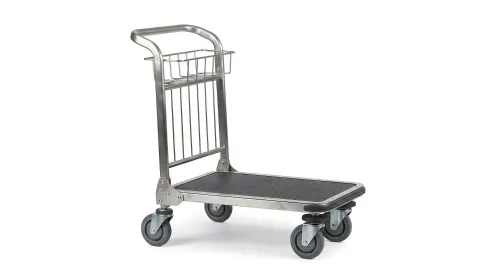
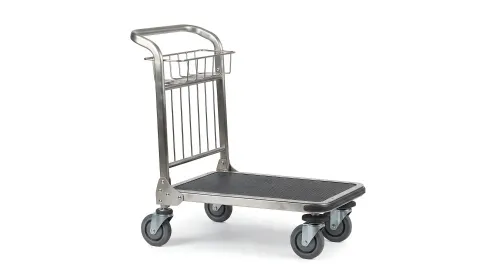
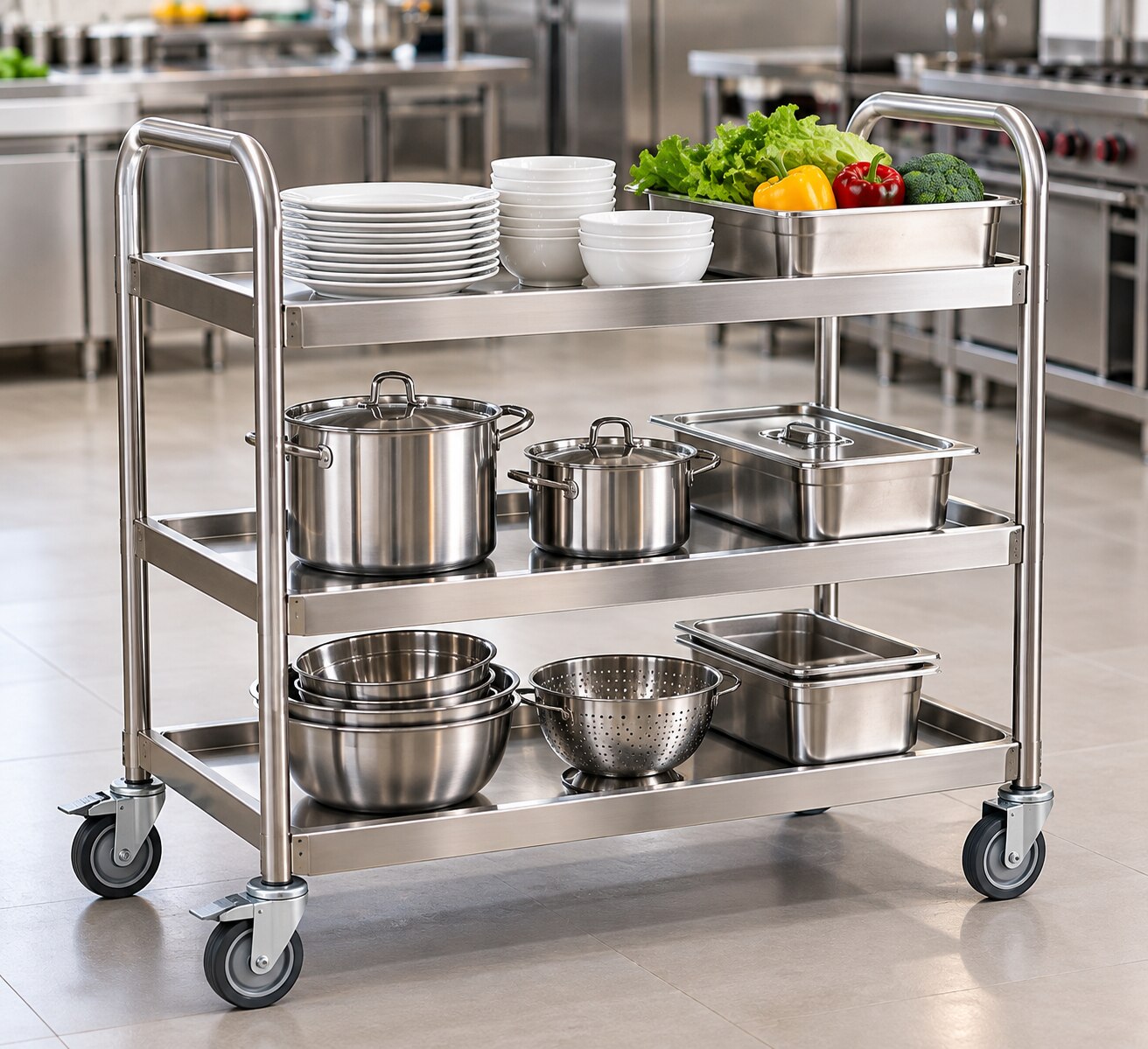
A front utility trolley for induction kadhai should function as a food-contact work surface, not a generic storage stand. Place it beside or in front of the vessel for ingredient staging, utensil placement, loading, unloading and moving cooked food into a receiving pan.
1. Set the trolley where the operator can reach the kadhai handles, ladle and receiving vessel without leaning across steam, oil or the hot vessel. Keep the handles clear, leave hot-surface clearance around the vessel, and create a direct, unobstructed route for a filled pan or container.
2. Position the working edge so the operator can see and reach the induction controls without reaching over the kadhai. Controls hidden behind or below a large vessel delay emergency shutoff and expose the operator to steam and splashing oil.
3. Use the top for clean ingredients, utensils and a receiving vessel; do not let a shelf, raised edge or stored pot block lifting or tilting the kadhai. The utility trolley needs stability during stirring and transfer, not simply space for supplies.
4. Keep the induction generator, cable entry, ventilation openings and service panels accessible from the trolley’s parked position. Do not turn the trolley into a closed replacement frame for the induction kitchen equipment; a sealed enclosure can restrict cooling and obstruct inspection.
5. Keep the trolley outside the hood’s capture zone only when that position preserves the cooking process and exhaust capture. Induction removes combustion at the appliance, but frying, sautéing and boiling still produce vapour, oil mist and grease-laden exhaust. Never place the trolley where it blocks the hood or forces unsafe transfer.
How to measure the kadhai, route and working load
Measure the induction kadhai and its route before choosing a front utility trolley for induction kadhai. A commercial kitchen trolley that fits the vessel but cannot clear a doorway, turn safely or carry its filled weight will fail in service.
1. Record the vessel’s footprint, magnetic-base diameter and base flatness. Confirm that the cooking base is ferromagnetic; stainless steel alone does not prove induction compatibility. Measure the empty kadhai and its filled operating weight, rather than relying on its nominal litre capacity.
2. Set the trolley top height against the way food leaves the vessel: align it with the outlet, the tilting point or the receiving pan. Measure the kadhai height, trolley length and width, handle sweep, and clearance for induction controls and cables. Keep controls visible and reachable without reaching over steam or oil.
3. Measure the complete route, including doorway width, aisle width and turning radius. Add clearance for the operator, handle movement, protruding vessel parts and the cable route. A trolley that clears its doorway but clips a wall during a turn is not route-compatible.
4. Calculate the real wet load: empty kadhai weight plus oil, gravy, food, utensils and ingredients. Do not use an empty-trolley rating. Specify a safety margin above the maximum working load and verify that rating at the actual centre of gravity; uneven loading reduces practical capacity even when the caster nameplate ratings appear sufficient.
Which top, shelf and stainless specification supports hygienic work
Use a solid, smooth, cleanable top when ingredients, ladles or a receiving pan sit directly on the utility trolley. Add a raised perimeter or positive restraint to stop a filled kadhai sliding during movement or vigorous stirring.
Keep the restraint low or shaped so it does not block lifting the hot vessel or form a dirt trap.
Choose a removable lower shelf for pots and utensils, or specify a sealed shelf with a fall-preventing lip. Do not store loose chemicals, packaging or unprotected food beneath a splashing kadhai; drips contaminate the shelf and anything below it.
Ask for food-zone construction aligned with NSF/ANSI 2 principles: radiused corners, continuous welds, sealed tube ends, and no exposed threads, sharp internal corners or open hollow sections. Grade selection depends on the cleaning environment.
| Grade | Best fit | Main risk |
|---|---|---|
| 304 stainless steel | Most commercial kitchen trolley work areas | Pitting from chloride-heavy water, saline foods or aggressive cleaners |
| 316 stainless steel | Coastal sites, saline processing or harsh chemical wash-down | Higher material cost without benefit in mild conditions |
State the stainless finish and wash-down limits in writing. Specify whether the induction kitchen equipment support allows hose cleaning, which detergents are permitted, and where water must not enter. A polished appearance alone does not prove hygienic suitability.
How to make the trolley stable, movable and electrically safe
Choose the caster arrangement by route: swivel casters turn in a tight aisle, while fixed casters track better along a straight path.
| Caster choice | Benefit | Check before purchase |
|---|---|---|
| Swivel | Tight turning | Wheel diameter, heat and grease resistance, wet-floor grip |
| Fixed | Straight travel | Wheel clearance, floor joints and doorway thresholds |
| Total-lock | Stops rolling and swivel movement | Engage every brake during stirring and transfer |
Specify a wheel diameter that clears the actual floor joints and thresholds without making the work surface too high. Confirm the wheel material tolerates heat beside the induction kadhai, resists cooking grease and remains stable on wet cleaning floors.
- Load the commercial kitchen trolley with the vessel in its normal position, including its filled operating weight. Push at the working edge, turn on the actual floor and test the transfer route.
- Engage total-lock brakes before stirring or moving cooked food. Two braked casters can still permit yaw, creep or tipping when the other swivel casters move freely.
- Route cables for induction kitchen equipment away from feet, hot surfaces and wet cleaning paths. Define a parking position before moving the trolley while connected; use a detachable or overhead connection where practical.
- If the trolley carries electrical equipment, require protective earthing, cable strain relief, liquid-ingress protection and residual-current protection. Do not seal the induction generator inside a cabinet that prevents cooling or inspection.
What to put in the purchase specification
Choose a fixed-height utility trolley when one kadhai and one receiving vessel define the workflow; choose adjustable height when operators, vessel sizes or transfer points vary.
| Option | What it means | When it applies |
|---|---|---|
| Fixed height | One specified top height, with fewer moving parts and easier cleaning | One kadhai, one receiving vessel and a stable transfer route |
| Adjustable height | A lockable height range matched to different users or vessels | Multiple operators, vessel sizes or receiving points |
Put these details in the purchase brief:
- Kadhai footprint, ferromagnetic magnetic-base diameter and flatness
- Filled operating weight, including the empty kadhai, oil, gravy, food, utensils and ingredients
- Top height, trolley length and width, doorway width, aisle width, turning radius and cable route
- Solid food-contact top, stated stainless grade and finish, wash-down limits, continuous welds, sealed tube ends and radiused corners
- Removable lower shelf with a fall-preventing lip, plus a raised restraint that does not block lifting the hot kadhai or trap soil
- Caster diameter, heat and grease resistance, wet-floor suitability, and a total-lock brake arrangement that stops rolling and swivel movement
- Tested working load at the actual centre of gravity, not the empty-trolley rating
Require a demonstration with a filled test load: push at the working edge, stir, turn and stop on the actual floor. Confirm that the restraint, brakes and cable route remain safe.
Ambica Sales & Services can help match a commercial kitchen trolley specification with induction kitchen equipment, ventilation access and the layout; request construction details and the stated working load rather than accepting the label utility trolley.
Related products
 | Scullery Platform Trolley with Removable Grid 1 Platform Trolley with Removable Grid 1 View product → |
 | Scullery Platform Trolley with Removable Grid 3 Platform Trolley with Removable Grid 3 View product → |
Frequently asked questions
What should a front utility trolley do at an induction kadhai?
It should provide a food-contact work surface for ingredient staging, utensil placement, loading, unloading and transferring cooked food into a receiving pan.
What measurements are needed before buying a utility trolley?
Measure the kadhai diameter and height, trolley clearance, route width, doorways, turning points, working heights and the filled equipment load.
Which stainless-steel features support hygienic trolley use?
Choose a smooth food-contact top, sealed or welded joints, radiused corners, a cleanable shelf and stainless steel suited to wet commercial-kitchen work.
How do you make an induction kitchen equipment trolley safe?
Use a stable frame, lockable castors, adjustable feet where needed, a load rating above the filled load and clear separation from induction controls, cables and ventilation openings.
Keywords