A food holding trolley can separate cooking from the service rush, but only when its temperature control, pan capacity, route access and cleaning design match the operation. By the end, you will know which trolley type fits your canteen or food court, how to use it safely, and which specifications to demand before buying.
Key takeaways
- Separate hot holding, cold holding and transport before comparing trolley models.
- Check food temperatures at loading, during staging and before service.
- Choose trolley capacity from peak meal volume, not average daily demand.
- Test doorways, lifts, power points and cleaning access on site.
What a food holding trolley does between cooking and service
A food holding trolley sits after cooking and before counter service: it keeps prepared GN pans, trays, or covered containers together while staff stage, move, and release meals.
In an industrial canteen or food court, it separates production from the service rush, so batches can leave the cooking line before queues form without occupying the counter.
- Cook and portion food in the production kitchen.
- Reheat previously cooked TCS food to 74°C (165°F) for 15 seconds where that standard applies, then load covered pans into the trolley.
- Hold the load during dispatch, or move it along the planned kitchen-to-counter route.
- Position the trolley at the serving point, open only the pans needed, and replenish the counter in controlled batches.
- Check the centre of food with a calibrated probe thermometer, record time and temperature, and keep hot food at or above 60°C where that is the operation’s target.
The trolley is therefore a staging and controlled holding point, not a cooker. A heated cabinet actively maintains temperature; an insulated trolley slows heat loss; a tray rack or service trolley only supports and moves containers. An unheated unit does not make food safe at serving temperature.
The food holding trolley for canteens earns its canteen food trolley benefits through fewer transfers, less staff crossing, and more flexible dispatch. It cannot erase holding-time limits: extended holding still damages texture, moisture, colour, and nutritional quality.
Hot holding, cold holding and transport are different functions
Read the specification for an active heating or refrigeration system, not just the word “holding.” A commercial food holding trolley controls temperature only when it has powered heating, refrigeration, airflow, and a stated operating range; an insulated cabinet slows temperature change but does not create or restore a safe serving temperature.
Classify the trolley by its actual function:
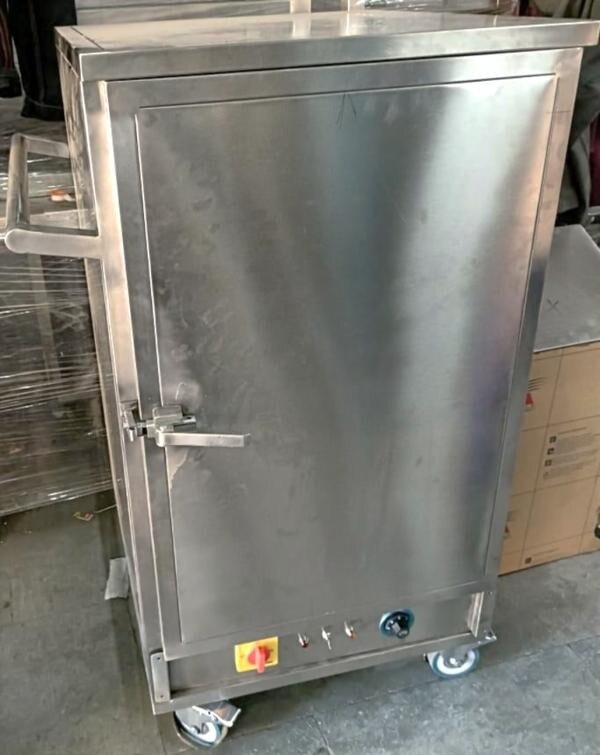
- Heated cabinet: maintains prepared hot food after it has been reheated. Under the FDA Food Code, previously cooked food is reheated to 74°C (165°F) for 15 seconds before hot holding; the trolley is not the reheating step.
- Refrigerated cabinet: keeps cold food cold during staging and movement.
- Insulated transport trolley: reduces heat gain or loss without actively controlling the load.
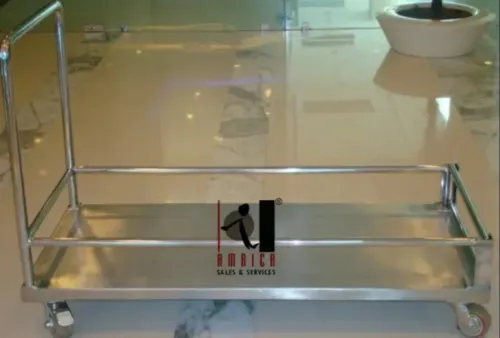
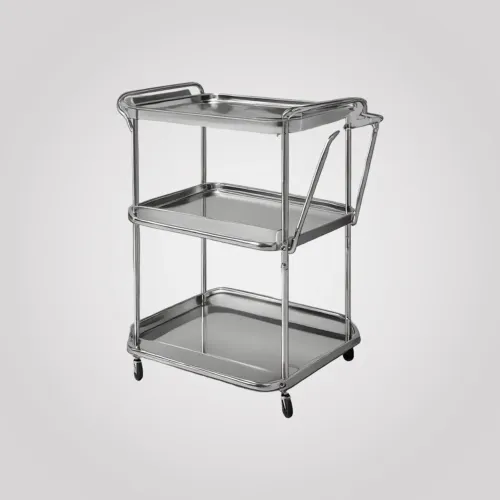
- Tray rack or service trolley: carries trays, GN pans or containers but has no temperature-control system.
A food court holding trolley with a heating element, fan-assisted circulation and a controller is suited to hot counter staging. A trolley with doors and insulation alone is transport equipment, even if it arrives warm.
Check the food’s centre with a calibrated probe, not only the cabinet display. Door openings, overloaded shelves, blocked airflow and long routes create cold zones. Set the operation’s approved hot-holding limit—60°C where that threshold is used, or the applicable local standard—and record time and temperature.
Dual-temperature models add flexibility, but also more controls, cleaning points, maintenance and electrical demands.
The operational benefits—and the limits—during a service rush
During a rush, a holding trolley buys schedule flexibility: staff can cook and load earlier, then stage covered pans near the counter instead of carrying individual containers during peak orders. That improves meal dispatch, reduces staff crossings and limits open-air food exposure.
Its canteen food trolley benefits depend on the service pattern:
- Move several GN pans in one trip from the production kitchen to the food court.
- Keep filled pans close to the serving line, so portions flow without repeated kitchen journeys.
- Use two-sided access when loading occurs behind the counter and service staff work at the front.
- Keep reserve food covered until needed, reducing handling and drying during the queue.
The phrase equipments industrial canteen food court food holding trolley for benefits should lead to a site-fit decision, not a capacity claim. Check that the trolley fits the route, lift, ramp, doors and electrical supply; a nominal pan count does not prove usable dispatch capacity.
A trolley extends the service window, not the safe holding limit. Reheat previously cooked food to 74°C for 15 seconds where the FDA Food Code applies, then maintain the operation’s approved hot-holding threshold: 57°C under the FDA Food Code, 63°C in UK Food Standards Agency guidance, or 60°C where that is your documented rule.
Record time and centre temperature with a calibrated probe. Holding too long still damages quality, and an unheated trolley cannot replace temperature control.
Temperature, moisture and cleaning controls that protect food quality
Reheat previously cooked time/temperature-control-for-safety food before placing it in a hot-holding cabinet. The FDA Food Code specifies 74°C (165°F) for 15 seconds; a trolley maintains heat but does not safely bring cold food up to serving temperature.
Run this operating check for every load:
- Verify the centre of the thickest portion with a calibrated probe thermometer, not just the cabinet display. Check several pans when shelves are full.
- Confirm the hot-holding limit used by your jurisdiction: 57°C (135°F) under the FDA Food Code, 63°C under UK guidance, or 60°C where that is your operating threshold.
- Record food temperature, time loaded, probe location and removal time. Set a maximum holding period for each menu item because prolonged holding damages texture, colour and moisture.
- Cool leftovers outside the trolley using a validated process: from 57°C to 21°C within two hours, then to 5°C within four more hours under FDA limits.
- Check door seals, shelf loading and airflow. Overloading, blocked vents and long routes create cold zones even when the controller shows a safe air temperature.
Humidity protects rice, vegetables and sauces from drying, but excess moisture softens fried food and creates condensation. Choose a food holding trolley for canteens with humidity control or venting when menus mix crisp and moist items.
For a commercial food holding trolley, inspect removable pan supports, smooth welded corners, door-gasket access, fan compartments and condensate drains before purchase. Inaccessible residue is a sanitation failure waiting to happen.
How to compare trolley specifications and prove the fit on site
Choose a trolley by usable meal capacity and route performance, not by the number of shelves. A food court holding trolley must match your GN pan format, batch size, loading frequency, corridor width, lift, ramp, doorway and service-counter access.
- Record the number and depth of pans required per dispatch, including covers, spare capacity and the gap needed for airflow.
- Measure the loaded trolley’s width, length, height, turning radius, wheel diameter and total weight.
- Measure every door, corridor, lift, ramp and threshold; test the route with the trolley fully loaded.
- Confirm voltage, phase, rated current, plug type, circuit capacity, cable length and heat released into the room.
- Check loading height, two-sided access, door swing, removable pan supports, gasket access, smooth welded corners and condensate drainage.
- Obtain heat-up time, recovery time after door opening, temperature range and holding uniformity, then verify centre-food temperatures with a calibrated probe.
| Area | Obtain | Prove on site |
|---|---|---|
| Capacity and format | GN 1/1, GN 2/1 or tray dimensions; pan count and depth | Load the actual menu pans without blocking airflow |
| Mobility and access | Loaded weight, caster locks, turning radius and clearances | Complete the route, lift and counter approach |
| Electrical and performance | Supply details, heat-up and recovery figures | Run it on the assigned circuit; measure representative pans after loading and transport |
For a food holding trolley for canteens, frequent service access favours rapid recovery and two-sided loading; short routes may suit insulated transport. If a catalogue lists only “commercial food holding trolley,” ask Ambica Sales & Services for these measured specifications before approval.
Related product
 | Trolleys Food Holding Trolley View product → |
Frequently asked questions
What does a food holding trolley do between cooking and service?
It keeps prepared GN pans, trays or covered containers organised while staff stage, move and release meals between the kitchen and service counter.
Is hot holding the same as transporting food?
No. Hot holding maintains serving temperature, cold holding protects chilled food, and transport moves containers safely between locations. Confirm which functions the trolley is designed to perform.
What are the main benefits of a food holding trolley for canteens?
A trolley can reduce carrying trips, organise meal components, shorten counter replenishment time and keep batches together during a service rush. It does not replace safe temperature checks or correct cooking and cooling procedures.
What should you check before buying a commercial food holding trolley?
Compare GN capacity, temperature range, insulation, power requirements, wheel and brake design, door clearances, cleaning access and service support. Test the trolley on the actual route from kitchen to counter.
Keywords