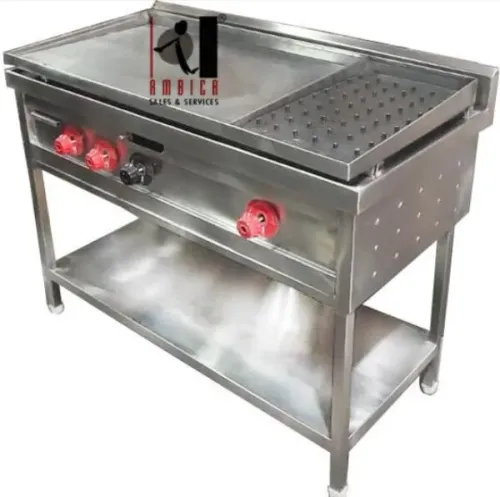
Gas remains an important cooking energy source in many professional kitchens because chefs can quickly control the intensity of heat. For restaurants, hotels, canteens and catering kitchens, the right gas cooking equipment can support rapid preparation while providing the flexibility required for different cooking methods.
In Mumbai, where commercial kitchens frequently work through intense lunch and dinner service periods, equipment should be selected according to workload rather than simply by burner count or physical size.
Why Professional Kitchens Continue to Use Gas
One of the main advantages of gas cooking is immediate heat response. The flame can be increased or reduced quickly, giving kitchen staff direct control during frying, boiling, sautéing and other preparation methods.
Commercial gas equipment can be particularly suitable for:
- Indian restaurants handling multiple gravies and curries
- Catering kitchens preparing food in large vessels
- Hotels with continuous food production
- Canteens serving fixed meal periods
- Restaurants requiring high-temperature cooking
- Institutional kitchens managing bulk quantities
However, performance depends heavily on matching burner capacity and equipment configuration with the intended cooking process.
What Should Be Checked Before Selection?
The first consideration is production volume. A small restaurant preparing limited orders does not necessarily require the same configuration as a banquet kitchen producing hundreds of portions.
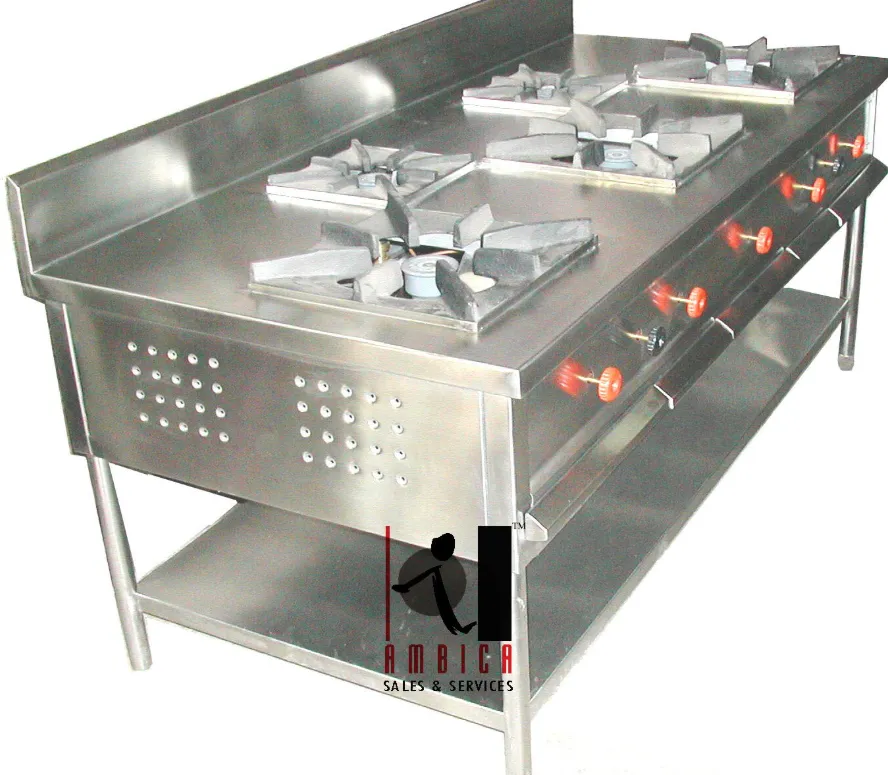
Operators should also consider burner spacing. Adequate spacing allows large vessels to be used without restricting access to neighbouring burners.
Other practical considerations include construction quality, cleaning accessibility, stability of the cooking surface and positioning of controls.
Ventilation Cannot Be an Afterthought
Gas cooking produces significant heat and combustion by-products. Kitchens therefore require appropriate ventilation and exhaust arrangements.
In Mumbai's warm and humid conditions, poorly managed kitchen heat can make working conditions uncomfortable while affecting the overall efficiency of the food preparation area.
The cooking line, exhaust hood and air movement should consequently be planned as interconnected parts of the kitchen.
Think About Daily Cleaning
Food spills, grease and oil inevitably accumulate around intensive cooking stations. Surfaces should therefore be accessible enough for regular cleaning.
Equipment with difficult-to-reach areas can increase maintenance time and allow grease deposits to build up.
Ambica Sales & Services manufactures and supplies commercial kitchen solutions for food businesses in Mumbai, Maharashtra. Understanding the customer's cuisine, available space and expected production volume helps determine an appropriate cooking configuration.
Gas-based equipment remains a practical option for many professional kitchens, but effective selection requires more than choosing a powerful burner. Capacity, construction, ventilation, workflow and maintenance should all be considered together. When these factors are properly planned, the cooking station can support faster service and smoother kitchen operations throughout demanding working hours.
Keywords